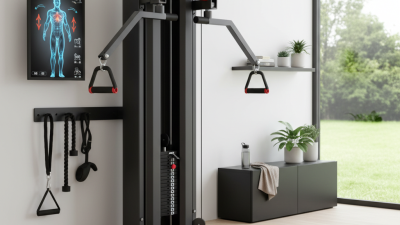
A wall mounted cable machine is a compact strength-training system fixed securely to a wall. It uses adjustable pulleys, cables, and weight stacks or plates to create controlled resistance. Unlike bulky gym stations, it leaves more floor space for movement, storage, or home workouts.
Strength coach Mike Boyle often says, “We don’t need more exercises; we need better execution.” That principle fits this equipment well. A wall mounted cable machine can support rows, presses, pulldowns, face pulls, squats, and rotational exercises. Its value depends on smooth movement, suitable loading, and careful setup. A cable handle should travel naturally, without scraping the frame or pulling the user off balance.
Small details matter. The anchor point must match the exercise height. The wall structure must support the manufacturer’s installation requirements. The pulley should move quietly and evenly. These checks are easy to overlook.
I have also found one limitation. A compact machine does not automatically make training better. Limited cable travel may affect taller users, while poor positioning can reduce comfort. That is worth admitting.
This guide explains what a wall mounted cable machine is, how it works, and where it fits into practical training. It also considers installation, safety, maintenance, exercise variety, and realistic buying decisions. The best choice is not always the largest or most expensive model. It is the system that fits the user, the wall, and the intended training space.
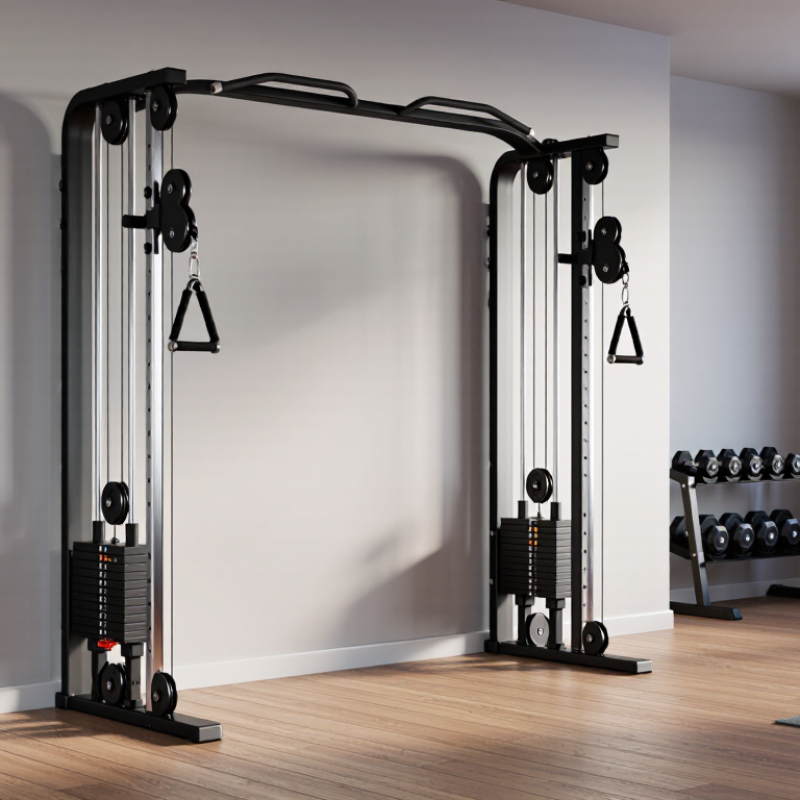
A wall mounted cable machine is a strength training system fixed directly to a solid wall. It uses adjustable cables to transfer resistance from weight stacks or external plates. Unlike free weights, the cables guide movement through a controlled path. This design supports exercises such as rows, presses, pulldowns, and cable rotations.
Its basic structure includes a steel wall frame, pulleys, cables, adjustable carriage points, and exercise handles. The frame carries the main load and keeps the system stable during movement. Pulleys change the cable direction and help create smoother resistance. Many models include two independent cable columns, allowing users to train one side at a time. The adjustment holes should lock firmly, with no noticeable wobble.
In practical use, installation quality matters as much as the machine itself. A suitable wall must support repeated pulling forces, not only the machine’s resting weight. Qualified installation and the supplied instructions reduce avoidable risks. Before training, inspect the cable coating, pulley movement, locking pins, and anchor bolts. Small faults can become serious under heavy tension.
The machine is compact, but it is not maintenance-free. Cables may stretch slightly, and pulleys can collect dust. That detail is easy to overlook. Users should also keep clear space around the handles and moving cables. The design is efficient, though beginners may need time to understand resistance changes at different cable angles.
A wall mounted cable machine is a compact strength-training system fixed to a reinforced wall. It uses pulleys, cables, and adjustable handles to create controlled resistance. The frame saves floor space while supporting exercises for the chest, back, shoulders, arms, and legs.
How a wall mounted cable machine works is fairly simple. A cable runs through one or more pulleys and connects to a weight stack or loading point. When you pull the handle, the cable moves around the pulley. The resistance then travels through the cable toward your body. Changing the attachment height alters the pulling angle and changes the exercise.
A higher setting can support movements like pulldowns or face pulls. A lower setting works well for rows, curls, and belt squats. Some machines provide two independent cables, allowing smoother bilateral or single-arm training. I once assumed heavier resistance always meant better progress. That assumption was wrong. Stable movement and full control matter more than chasing numbers.
The wall must be strong enough for the machine and repeated pulling forces. Proper anchors are essential. A loose mount can cause movement, noise, or injury. Before training, check the cable, pulleys, locking pins, and attachments. Keep the cable path clear, especially near children or pets. Even experienced users should avoid sudden jerking. Slow repetitions reveal weak positioning quickly.
| Data Dimension | Typical Specification or Value | How It Works | Practical Benefit |
|---|---|---|---|
| Basic Definition | A compact resistance-training system fixed to a wall or reinforced mounting frame | The user pulls one or two handles connected to cables that run through pulleys and apply resistance. | Provides a stable exercise station while using less floor space than many freestanding gym machines. |
| Main Resistance Source | Weight stack, plate-loaded resistance, or an external resistance system | Cable tension is created when the selected weight stack moves or when weight plates are lifted from a loading peg. | Allows resistance to be adjusted for different strength levels and exercises. |
| Pulley System | Fixed pulleys, adjustable pulleys, or a combination of both | Pulleys change the direction of the cable and guide it smoothly between the resistance source and the handle. | Supports pushing, pulling, pressing, rowing, and rotational movements from multiple angles. |
| Cable Ratio | Common configurations include 1:1 and 2:1 ratios | With a 1:1 ratio, the handle generally moves about the same distance as the resistance carriage. With a 2:1 ratio, the handle travels about twice as far while the effective resistance is approximately half the selected load. | A 1:1 ratio usually provides greater resistance, while a 2:1 ratio generally offers smoother movement and a longer cable path. |
| Adjustable Cable Height | Multiple vertical positions along a guide rail or upright column | The pulley is repositioned to match the height and direction of the intended exercise. | Low positions suit curls and rows; middle positions suit presses; high positions suit pulldowns and triceps movements. |
| Typical Resistance Range | Often approximately 2.5–100 kg of selected load, depending on design and ratio | Resistance is changed by moving a selector pin on a weight stack or adding and removing plates. | Offers options for warm-ups, rehabilitation, general fitness, and progressive strength training. |
| Cable Travel | Varies by frame height, pulley position, and cable ratio; commonly suitable for short and extended pulling motions | The cable unwinds or moves through the pulley path as the handle travels away from the machine. | Provides a broad range of motion for exercises that require controlled extension and contraction. |
| Common Attachments | Single handles, straight bars, curl bars, rope handles, ankle straps, and rowing handles | Attachments connect to the cable through a carabiner or similar connector. | Different attachments alter grip position, exercise angle, and the muscles emphasized. |
| Movement Type | Constant-tension resistance through a guided cable path | The pulley system maintains cable tension during much of the movement, provided the cable remains engaged with the resistance system. | Encourages controlled repetitions and allows exercises in multiple planes of motion. |
| Muscle Groups Trained | Chest, back, shoulders, arms, legs, hips, and core | Changing the attachment, pulley height, stance, and direction of pull changes the exercise pattern. | One machine can support a wide selection of upper-body, lower-body, and functional exercises. |
| Wall Mounting Requirement | A solid structural wall or properly reinforced mounting surface | The frame transfers pulling forces and vibration into the mounting surface through anchors and fasteners. | Correct installation improves stability and reduces unwanted movement during training. |
| Frame Materials | Welded steel frame with coated or painted corrosion-resistant surfaces | The frame supports the pulleys, cable guides, resistance components, and attachment points. | Steel construction provides the rigidity needed for repeated loading and regular use. |
| Safety Components | Cable stops, protective guards, locking pins, adjustment mechanisms, and secure attachment points | These components help keep the cable, pulley, and resistance system aligned during operation. | Reduces the likelihood of uncontrolled cable movement and accidental equipment adjustments. |
| Space Requirement | Small wall footprint, plus additional clearance for the user and moving cable | The machine occupies wall space, while the exercise area extends outward according to the movement being performed. | Useful in home gyms, studios, and training areas where floor space is limited. |
| Maintenance Needs | Regular inspection of cables, pulleys, fasteners, guides, and attachment points | Moving parts should be checked for fraying, unusual noise, looseness, misalignment, or excessive wear. | Routine maintenance helps preserve smooth operation and supports safe long-term use. |
| Typical Exercises | Cable crossover, chest press, lat pulldown, seated row, face pull, triceps pushdown, biceps curl, lateral raise, and cable squat | The user selects an appropriate pulley height and attachment, then performs the movement while maintaining cable tension. | Supports both isolated muscle exercises and compound functional movements. |
Note: Specifications such as resistance range, cable ratio, pulley travel, and mounting dimensions vary by machine design. Always follow the installation, loading, and maintenance instructions supplied with the equipment.
A wall mounted cable machine anchors resistance training to a vertical frame. It saves floor space and supports pulling, pressing, rowing, and rotational exercises. Common designs include single-pulley units, dual-pulley systems, and functional trainers with two adjustable arms.
A single pulley suits focused movements, such as triceps pushdowns. Dual systems allow independent arm training and smoother cable crossover exercises. Some compact models fold closer to the wall when not in use.
Adjustability determines how useful the machine feels. Look for multiple pulley height positions, especially from ankle level to above shoulder height. Low settings support curls and seated rows. High settings work well for pulldowns and face pulls.
Independent pulleys help correct strength differences between sides. A rotating handle can reduce wrist strain during pressing movements. Cable length also matters. Short cables may restrict full-range movements for taller users.
Resistance usually comes from weight plates or an integrated weight stack. Plate-loaded systems offer flexible loading, but changing plates takes extra time. Weight stacks feel faster during circuit training.
Check the frame’s mounting surface, bolts, and maximum rated load before installation.
I once underestimated wall strength, and the machine shifted slightly during a row. That small movement changed the exercise completely. A perfect setup is rare.
Recheck alignment, cable wear, and pulley noise regularly. Safety straps and secure attachments deserve attention, even during light workouts.
A wall mounted cable machine anchors resistance equipment to a reinforced wall. It uses pulleys, adjustable handles, and weight stacks or plates. The cable travels smoothly through different angles. This design supports presses, rows, squats, curls, and rotational movements in one compact area. According to ACSM’s 2024 Worldwide Survey, traditional strength training ranked among the leading global fitness trends. That demand reflects a practical need for efficient resistance training.
Its main benefit is space efficiency. A mounted unit leaves the floor mostly open, which suits small home gyms. Adjustable cable paths can train muscles through horizontal, vertical, and diagonal movement. The resistance also stays relatively consistent through each repetition. WHO guidelines recommend muscle-strengthening activity on at least two days weekly. A cable machine can help users meet that target with controlled, progressive loading. It may feel smoother than free weights, especially during rehabilitation-style exercises.
Limitations matter. Wall mounting requires structural assessment, accurate installation, and enough clearance around the cables. A weak wall can create serious movement and safety problems. The machine also depends on pulleys, bearings, and cables that need inspection. It cannot fully replace barbells or dumbbells for every strength goal. Heavy compound lifting may require more load capacity and floor space. In practice, beginners sometimes chase heavier settings before mastering posture. That mistake is easy to make. A qualified trainer should check anchor points, range of motion, and technique before demanding higher resistance.
What Is a Wall Mounted Cable Machine?
Safety Guidelines and Maintenance Requirements
A wall mounted cable machine uses pulleys, cables, and adjustable resistance for strength training. Its compact frame saves floor space, but the wall connection carries serious loads. Installation should use structural studs or suitable masonry, never weak drywall alone. A qualified installer should verify the anchors, wall condition, and safe working load.
Before each session, check the cable for broken strands, flattened sections, or rust. Inspect pulley grooves and confirm that every adjustment pin locks fully. Test the machine with light resistance first. Keep hands away from moving pulleys. Maintain clear space around the frame, especially near the cable path. Loose clothing can catch unexpectedly. Stop using the unit if it shifts, squeaks sharply, or feels uneven.
Maintenance needs a written routine. Wipe sweat from metal surfaces after training, since moisture encourages corrosion. Check anchor bolts and frame fasteners weekly. Examine cables, pulleys, handles, and protective covers monthly. Tighten hardware carefully, but do not force damaged threads. Use only cleaning products and lubricants approved for the equipment. Lubrication is not always helpful. Some parts need inspection, not oil. No inspection routine is perfect, so record defects and repair them before the next workout. Never modify the resistance system or exceed its stated capacity.
A wall-mounted cable machine uses cables, pulleys, and adjustable resistance to support strength exercises. The chart presents a practical inspection schedule: check visible safety points before use, inspect hardware weekly, examine cables and pulleys monthly, complete a detailed condition check quarterly, and arrange professional servicing annually. Always follow the equipment manufacturer's instructions and remove the machine from service if damage, unusual noise, fraying, or loose hardware is found.