What Is a Pouch Cell Trimming Machine?
A Pouch Cell Trimming Machine is a specialized production system used to cut, shape, and finish pouch-cell battery edges after sealing. It removes excess aluminum-plastic laminate with controlled pressure and accurate tooling. The process may look simple. It is not.
During manufacturing, each pouch cell passes through guides, clamps, cutting dies, and inspection points. The machine must protect the sealed electrolyte area while producing a clean, consistent edge. A poor cut can create sharp corners, uneven dimensions, or hidden damage near the seal. These defects may affect stacking, module assembly, and long-term reliability.
Dr. Martin Winter, a leading battery scientist, has said, “The battery is the heart of an electric vehicle.” That observation gives trimming a wider meaning. The machine does not improve battery chemistry, but it supports the physical quality surrounding that chemistry. Precision matters.
In practical use, operators monitor blade wear, alignment, burr formation, and dust control. They also check whether the trimmed pouch remains flat and stable. Small variations can become expensive problems later. This is where experience matters.
Still, trimming is not a perfect process. Different pouch materials, cell sizes, and sealing designs require different settings. A machine calibrated for one format may perform poorly on another. That limitation deserves attention.
This article examines how a Pouch Cell Trimming Machine works, which components influence its accuracy, and why safe, repeatable trimming supports modern battery production. It also considers maintenance, quality inspection, and the practical decisions manufacturers often overlook.
Definition and Purpose of a Pouch Cell Trimming Machine
What Is a Pouch Cell Trimming Machine?
Definition and Purpose of a Pouch Cell Trimming Machine
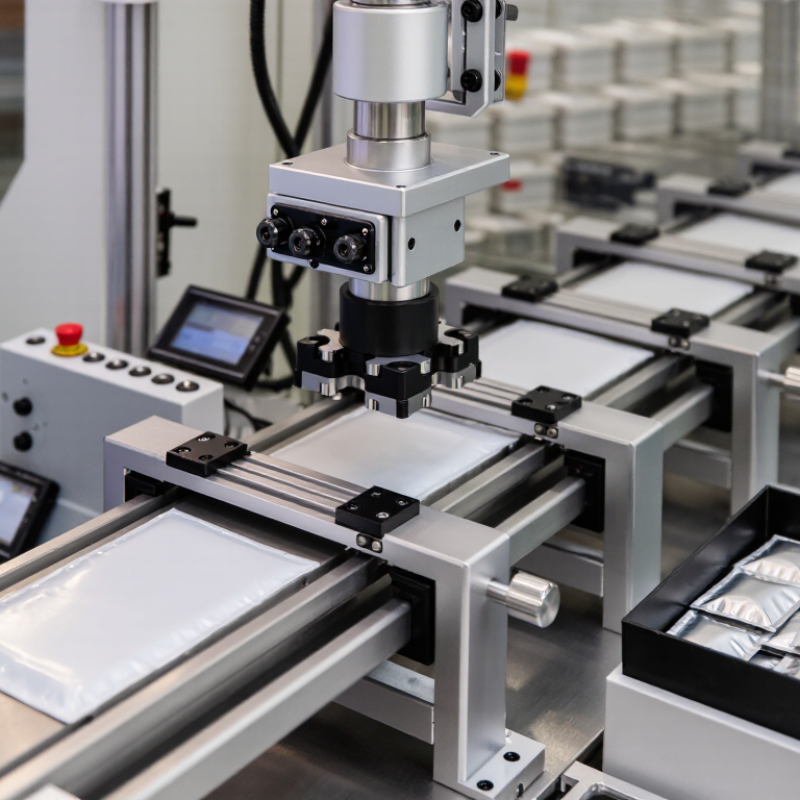
A pouch cell trimming machine removes excess aluminum-plastic laminate after cell sealing. It creates a controlled edge around the battery body. The process supports accurate cell dimensions, cleaner handling, and stable downstream assembly. In practical production, a cutting tool follows programmed coordinates while fixtures hold the soft pouch firmly. This prevents wrinkles, shifting, and accidental damage near the sealed area.
The purpose is not simply appearance. Precise trimming helps cells fit correctly into modules and reduces loose material near electrical connections. It can also limit sharp edges and laminate fragments. The International Energy Agency reported that global electric vehicle battery demand exceeded 750 GWh in 2023. That scale increases pressure on manufacturers to improve repeatability and reduce material waste. Every inconsistent edge can create an inspection delay.
Small details matter.
A reliable machine usually combines vision inspection, adjustable tooling, dust control, and measurement feedback. Operators should verify blade wear and sealing distance during each production shift. The IEA’s Global EV Outlook 2024 also noted that global battery manufacturing capacity exceeded two terawatt-hours in 2023. However, higher capacity does not guarantee higher quality. Trimming remains sensitive to pouch tension, heat effects, and cell thickness. I may be too optimistic about full automation; human inspection still catches defects that sensors sometimes miss. So, the machine should be treated as a precision process-control tool, not a complete quality solution.
How the Pouch Cell Trimming Process Works
What Is a Pouch Cell Trimming Machine?
How the Pouch Cell Trimming Process Works
A pouch cell trimming machine removes excess aluminum-plastic laminate after the cell has been heat-sealed. The process creates a clean, controlled edge around the battery package. Alignment matters. Even a small offset can damage the seal or leave an uneven profile.
The operator places the sealed pouch cell into a shaped fixture. Sensors check its position before cutting begins. A servo-driven blade, rotary cutter, or punch then follows a programmed path. Cutting speed and pressure must match the pouch material and cell thickness. Excess film falls into a collection area, while the finished cell moves toward inspection. Sharp edges, torn laminate, and exposed sealing layers require rejection or review.
Inspection may combine cameras, dimensional gauges, and manual checks. Experienced technicians often examine the first pieces from every setup. They look for wrinkles near corners and compression marks beside the seal. These details can reveal fixture wear or incorrect tooling pressure. Clean cutting also reduces loose particles around later assembly steps. Small errors spread.
In real production, trimming is not perfectly automatic. Film thickness can vary, and a stable setting may need adjustment. That is why reliable machines record process data and support controlled parameter changes. Operators should verify blade condition, fixture cleanliness, and seal distance regularly. A practical mistake is focusing only on cutting speed; edge quality usually depends on alignment, pressure, material behavior, and inspection together.
Materials, Cell Types, and Production Applications
What Is a Pouch Cell Trimming Machine?
A pouch cell trimming machine removes excess aluminum-plastic laminate after heat sealing. It creates a clean, consistent edge around the cell. The machine may use rotary blades, cutting dies, or servo-controlled tools. Each method suits different production speeds and pouch dimensions. Operators must control cutting pressure carefully. Excess pressure can deform the sealed area.
Material behavior is central to trimming quality. Pouch films usually combine aluminum foil, polymer layers, and heat-sealing materials. These layers respond differently to force and temperature. A sharp blade can reduce burrs and film peeling. However, blade wear often changes the cut profile before operators notice it. Edges matter. Inspection should check seal exposure, wrinkles, particles, and dimensional accuracy.
Pouch cells can support lithium-ion chemistries such as lithium iron phosphate and nickel-based systems. Their formats range from small consumer cells to large energy-storage and electric-vehicle cells. Trimming equipment is used after forming and sealing, before testing or module assembly. In prototype lines, flexible tooling helps engineers adjust cell sizes quickly. In high-volume production, automated feeding and vision inspection improve repeatability. Still, a perfect-looking edge does not prove internal seal strength. Sampling, leak testing, and process records remain necessary. Even experienced teams may need to revise cutting speed when film batches change.
What Is a Pouch Cell Trimming Machine?
A pouch cell trimming machine removes excess aluminum-plastic laminate from the sealed perimeter of a lithium-ion pouch cell. The representative chart below shows common thicknesses of the main pouch packaging layers that the trimming process may cut.
Materials
Typical pouch packaging uses an outer nylon layer, an aluminum barrier foil, an adhesive layer, and a heat-sealable polypropylene layer.
Cell Types
Trimming equipment is used for both stacked and wound pouch cells, including cells made for consumer electronics, electric vehicles, and energy-storage systems.
Production Applications
Typical operations include sealed-edge trimming, corner cutting, burr control, dimensional inspection, and automated transfer to the next assembly stage.
The chart uses representative engineering values in micrometers. Actual laminate structures vary by pouch design, supplier specification, sealing process, and cell application.
Safety, Quality Control, and Maintenance Considerations
What Is a Pouch Cell Trimming Machine?
Safety, Quality Control, and Maintenance Considerations
A pouch cell trimming machine removes excess aluminum-plastic film around a battery pouch. It creates a consistent edge for later assembly and sealing. The cutting area needs a strong guard, reliable interlocks, and a visible emergency stop. Operators should check these features before every shift. Loose film scraps can hide near the blade. They must be removed with approved tools, never bare hands. Small oversights can cause serious injuries.
Quality control starts with stable cell positioning. A camera, gauge, or calibrated fixture can verify trimming width and edge alignment. Inspectors should examine corners, seal zones, and possible burrs. A clean edge is important. Excessive pressure may damage the seal or deform the pouch. Sampling records should include dimensions, tool condition, and operator observations. A cell may look acceptable while holding a hidden seal weakness.
Maintenance depends on real wear, not only scheduled dates. Clean the worktable and guides regularly. Inspect blades for chips, dull edges, and uneven contact. Confirm fastener torque and recalibrate measuring devices when results drift. Use an energy-isolation procedure before servicing moving parts. Keep clear maintenance records. Replacing blades only after defects appear is a common mistake. Yet even a detailed checklist can miss gradual alignment changes. Reviewing rejected cells can reveal what routine inspections overlook.

