How to Choose the Best Pressure Reducing Regulators for Your Needs?
When selecting the right Pressure Reducing Regulators, expert David Perkins emphasizes, "Understanding your specific needs is crucial." His insight reflects the complexities involved in choosing the best regulator for various applications.
Pressure Reducing Regulators serve a vital function in controlling gas and liquid flow in numerous systems. As industries grow, the demand for efficient and reliable regulators increases. However, many users struggle with the variety of options available. Factors such as pressure range, material compatibility, and application requirements can complicate decisions.
Choosing the perfect regulator is not always straightforward. Initial research may lead to confusion due to technical jargon and differing specifications. Users often overlook critical details that could affect performance. Reflecting on these challenges is essential, as understanding your unique needs is the first step to making the right choice in Pressure Reducing Regulators.
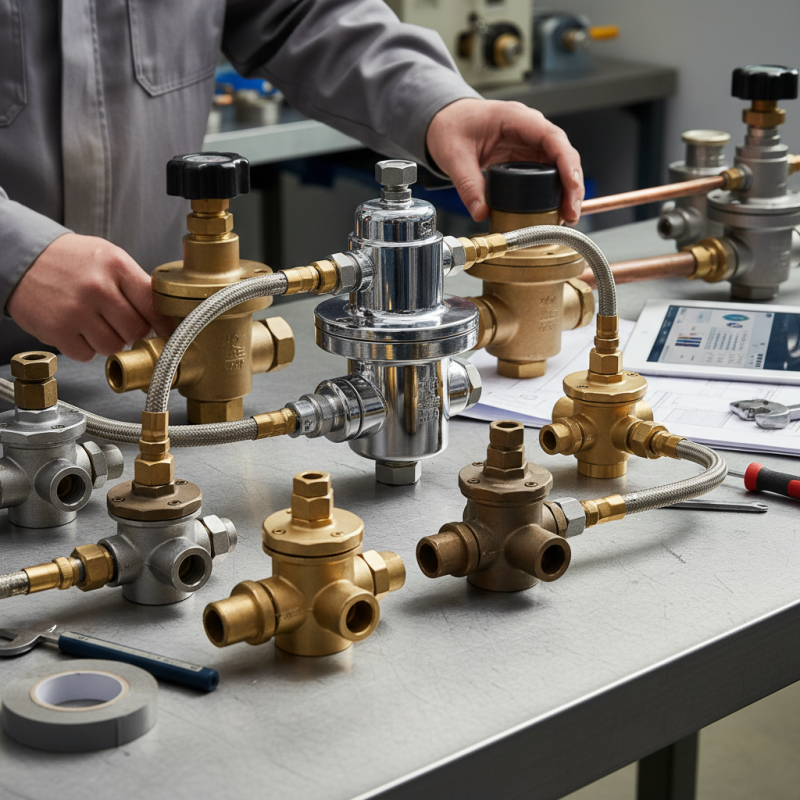
Understanding the Function of Pressure Reducing Regulators
Pressure reducing regulators (PRRs) play a critical role in various industrial applications. Their primary function is to maintain a constant output pressure. This ensures safe and efficient operations within systems. Industrial usage reports indicate that approximately 30% of operational errors stem from improper pressure management. This highlights the need for reliable PRRs.
Understanding how these devices function is key to selecting the right one. PRRs work by taking a high inlet pressure and adjusting it down to a lower, stable outlet pressure. Most regulators come with adjustable settings. However, many users overlook the importance of calibrating these settings accurately. A miscalibrated regulator can lead to pressure fluctuations. This can affect the performance of machinery and may lead to costly downtime.
Industry studies point out that over 40% of energy waste in pneumatic systems results from inappropriate pressure settings. Investment in quality regulators can mitigate these issues. Observing regular maintenance practices also plays a significant role. Many professionals neglect this, leading to degraded performance over time. Recognizing these aspects can help users achieve better system efficiency and operational reliability.
Key Factors to Consider When Choosing a Pressure Reducing Regulator
Choosing the right pressure reducing regulator involves several key factors. First, consider the inlet pressure range. Different applications require different ranges. Understanding this helps to avoid equipment damage. Too high pressure can cause leaks or failures. Devices may not function well if the pressure is too low.
Next, look at the outlet pressure requirements. This is just as crucial. Ensure that the regulator can maintain a stable outlet pressure under varying conditions. The materials used in the regulator also matter. Some environments can cause corrosion or wear. This can lead to failure over time. Select materials suitable for your specific application.
Also, assess the flow rate capacity. It should match your system’s requirements. A regulator that can't handle the flow may lead to performance issues. It’s also essential to consider the size and installation space available. Tight spaces may limit your choices. Lastly, check for maintenance needs. Some regulators may require frequent attention, while others are more durable. Balancing these factors can be challenging, but it’s key for optimal performance.
Types of Pressure Reducing Regulators and Their Applications
Pressure reducing regulators are essential for various applications. They help maintain consistent pressure levels, crucial in industries like gas, oil, and water. Each type serves different functions, influencing performance and safety.
One common type is the diaphragm regulator. It is often used in gas applications. These regulators adjust pressure based on the change in diaphragm movement. Reports show they can effectively operate under high flow rates, reaching up to 8000 SCFH. However, they may struggle with small fluctuations, which can lead to inefficiencies.
Another type is the piston regulator. These are known for their robustness and accuracy. They excel in high-pressure environments and can withstand rigorous conditions. Studies indicate they reduce pressure variability by up to 20%. Still, their complexity can result in higher maintenance needs. Users must balance precision with ongoing upkeep, ensuring optimal function without excessive effort. Understanding each option’s strengths and weaknesses is vital for making informed decisions.
Evaluating Performance Specifications for Pressure Regulators
When choosing pressure reducing regulators, performance specifications are crucial. They determine how effectively a regulator can manage pressure. Key specifications include flow capacity, outlet pressure range, and response time. Accurate flow capacity ensures consistent pressure delivery. For instance, many industrial applications require a flow rate of 50 SCFM or more. A regulator that doesn’t meet this can cause operational delays.
The outlet pressure range should align with your system requirements. Standard ranges often lie between 0-300 PSI. However, some specialized applications need more precise adjustments. It’s interesting to note that a study indicated nearly 30% of failures stem from miscalculating the required outlet pressure. Response time is another critical factor; a poorly responsive regulator can lead to pressure spikes. Regulators with a response time under 2 seconds are usually preferred in sensitive environments.
In the end, the effectiveness of pressure reducing regulators can significantly impact system performance. Recognizing the balance between specifications and real-world demands is important. Every application presents unique challenges. Regular evaluation and adjustments based on performance data are necessary for optimal use. Use rigorous standards to guide your selection process. Prioritizing detailed performance specifications can prevent costly errors.
Installation and Maintenance Tips for Optimal Regulator Performance
When installing a pressure-reducing regulator, proper setup is key. Follow the manufacturer's guidelines closely. Ensure the regulator is mounted in a clean, dry environment. Dirt can lead to malfunctions. Regularly inspect all fittings for tightness. A loose connection can cause leaks.
Maintenance is equally essential. Clean the filter regularly to prevent blockages. According to industry reports, neglecting maintenance can reduce a regulator's life by up to 50%. Use lubricant on threaded connections to ease adjustments. Watch for signs of wear, like corrosion or unusual noises during operation.
It’s vital to test the pressure regularly. This ensures optimal performance. Low pressure might indicate a blockage, while high pressure can signal a malfunction. Both scenarios require attention. Many users underestimate the effects of temperature changes on regulator performance, which can lead to unpredictable results.

