Why Choose a Smoke Precipitator for Your Business?
A commercial kitchen, welding bay, or production room can fill with smoke before anyone notices a problem. Frying oil, hot metal, and fine process particles may cloud sightlines, settle on nearby surfaces, and place extra demands on ventilation. A Smoke Precipitator can help capture airborne smoke near its source, depending on its design and proper installation. Many models use charged collection plates, while others combine filtration with different separation methods. The details matter. A unit sized for one hood may perform poorly on a larger production line. Less visible smoke is useful, but it does not prove that every airborne pollutant is controlled.
For a business, the choice involves more than the equipment’s advertised capacity. Owners should compare airflow needs, smoke type, available space, energy use, and cleaning requirements. It varies. Ask how often collection plates or filters need attention, and whether staff can reach them safely. Maintenance affects performance. A neglected unit may collect grease or particles unevenly, even when it was properly sized. Noise, pressure changes, and fit with existing exhaust equipment also deserve a practical review. No machine is a shortcut for poor hood design or weak upkeep. This guide explores where a Smoke Precipitator may help, what to check before purchase, and which trade-offs deserve a second look. The right system can support cleaner work areas, but real results depend on the site and consistent care.
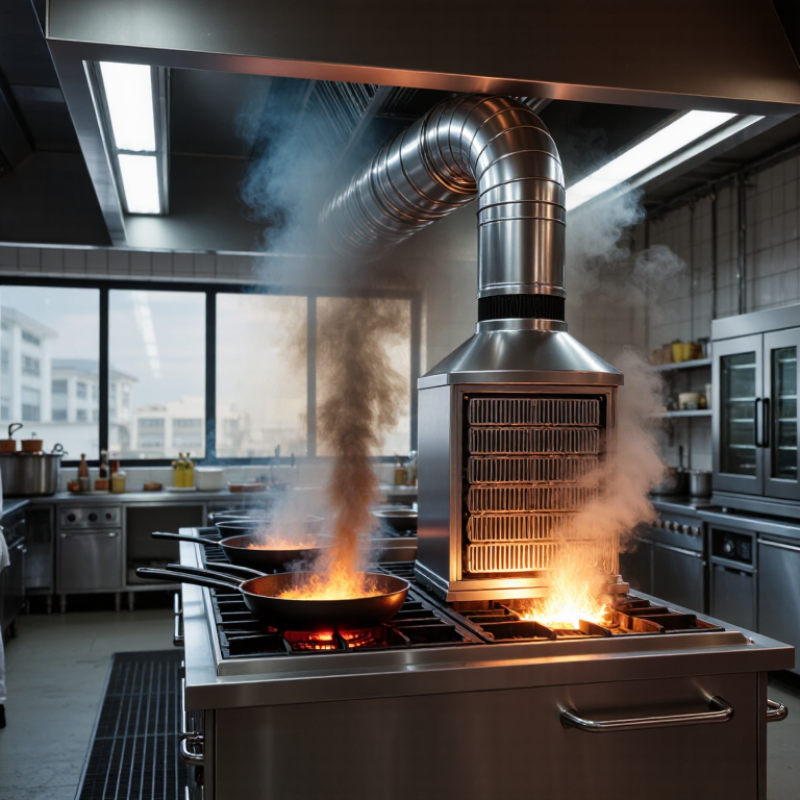
What Is a Smoke Precipitator?
A smoke precipitator is an air-cleaning device designed to capture fine particles from contaminated airflow. It commonly uses electrostatic attraction rather than a traditional mesh filter. Inside the unit, smoke particles receive an electrical charge. Charged plates then attract and hold them. That is the basic principle.
In a commercial kitchen, this process can reduce grease mist, soot, and visible smoke moving through an exhaust system. In a workshop, it may help control airborne oil particles near cutting or heating equipment. During facility checks, technicians often inspect airflow, pressure changes, and particle readings before judging performance. A clean collection plate matters. Dirty plates reduce capture efficiency and may create unpleasant odors.
A smoke precipitator does not remove every gas or vapor. It also cannot correct poor ventilation, excessive emissions, or badly positioned extraction hoods. Results depend on airflow speed, particle size, moisture, and regular maintenance. Operators should clean internal plates according to the equipment guidance and document inspection dates. Safety controls deserve attention too, especially around high-voltage components. The technology is effective, but not effortless. Even a well-sized unit can underperform when filters, ducts, or sensors are neglected. Careful testing is better than relying on clear-looking air alone.
How Does a Smoke Precipitator Remove Airborne Particles?
Why Choose a Smoke Precipitator for Your Business?
How Does a Smoke Precipitator Remove Airborne Particles?
A smoke precipitator uses electrostatic forces to capture suspended particles. It does not simply trap smoke inside a filter. Instead, a discharge electrode gives airborne particles an electrical charge. The particles then move toward oppositely charged collection plates.
Inside the unit, plates may look clean from a distance. Up close, they collect a dark, sticky layer of soot. A rapping system or water wash removes this buildup. The particles fall into a hopper for controlled handling. This process can reduce visible smoke and fine particulate emissions. However, it does not remove every gas or odor.
The US EPA Air Pollution Control Cost Manual reports that well-designed electrostatic precipitators can exceed 99% particle collection efficiency. Actual performance depends on particle size, moisture, electrical conditions, and maintenance. Small particles remain challenging. The World Health Organization’s 2021 Air Quality Guidelines set an annual PM2.5 guideline of 5 micrograms per cubic meter. That target shows why outlet testing matters.
Operators should inspect electrodes, plates, insulation, and hopper seals regularly. A dirty plate lowers collection performance. Poor grounding can do the same. I have found that real systems rarely perform like laboratory examples without careful tuning. Energy use also deserves attention. A precipitator may reduce particulate emissions, yet neglected maintenance can quietly erase much of its benefit.
Where Can Businesses Use Smoke Precipitators?
Businesses may use smoke precipitators wherever routine work produces airborne particles. In commercial kitchens, they can help capture smoke and grease particles near grills, charbroilers, and wok stations. Food-production sites may need them around roasting or baking lines. Keep the capture point close to the source. Smoke travels quickly.
Metalworking shops can consider precipitators for fumes and fine particles from welding or thermal cutting, subject to a proper ventilation assessment. Woodworking facilities may use them where processes create smoke, though ordinary dust extraction is still essential. In small workshops, a poorly placed unit may miss emissions that drift behind equipment. That detail matters.
Some businesses install these systems in shared production areas, test kitchens, or indoor venues with food preparation. A site survey should identify the process, airflow, operating hours, and existing exhaust. Precipitators target particles; they do not necessarily remove every gas or odor. Filters or collection plates also need regular inspection and cleaning. In practice, maintenance is easy to postpone during a busy shift. That can reduce performance. Select equipment for the actual emission load, and confirm that the full ventilation setup fits the space.
What Operational Benefits Can a Smoke Precipitator Provide?
A smoke precipitator can help keep airborne particles from settling on nearby surfaces and equipment. In a busy workshop, that may mean less soot on light covers, vents, and workbenches. Staff spend less time wiping residue and more time on routine tasks. The actual improvement depends on the smoke load, airflow, and correct equipment sizing. Cleaner air is useful. It is not a substitute for suitable ventilation or source control.
Operationally, a well-maintained unit can support steadier visibility around work areas and reduce particulate buildup in ducts and machinery. Operators should check collection plates or filters, seals, and airflow on a schedule suited to the process. A rising pressure drop or visible smoke escaping the capture area can signal a problem. Some precipitators collect particles but do not remove every gas or odor, so performance should be assessed against the specific emissions present. Maintenance takes time, and poorly planned cleaning can interrupt production. That trade-off is easy to underestimate. A simple log of inspections, cleaning intervals, and observed airflow gives teams practical evidence for adjusting upkeep.
Why Choose a Smoke Precipitator for Your Business?
Typical particulate-matter collection efficiency ranges for common air-pollution control technologies
Electrostatic precipitators can achieve high particulate collection efficiency, helping reduce particle emissions and visible smoke when properly selected and maintained. Actual performance depends on the equipment design, operating conditions, and the particles being controlled. Ranges shown are general figures reported in U.S. EPA air-pollution control technology fact sheets; they are not performance guarantees.
What Should Businesses Consider When Choosing a Smoke Precipitator?
Choosing a smoke precipitator starts with understanding the emissions at your site. Smoke from cooking, manufacturing, or other processes can contain different particle sizes and moisture levels. Ask a qualified supplier to assess the source, airflow, and expected operating hours before recommending equipment. A unit sized only by room area may perform poorly if the capture hood or ductwork is inadequate. Measure before buying.
Consider how the system will fit into daily operations. Check its rated airflow, collection performance for your specific particles, power needs, noise level, and available installation space. Ask how often collection cells or filters need cleaning, how long service takes, and whether staff can reach components safely. Maintenance affects both performance and operating cost. It is easy to underestimate that burden.
Also review how the unit handles changing workloads, grease or moisture, and peak production periods. Request clear performance data and confirm what conditions those figures assume. Compare the full cost, including installation, energy, cleaning, and replacement parts, rather than focusing only on the purchase price. Noise matters. Local ventilation and workplace requirements may also apply, so verify them with a qualified professional. Even a well-chosen unit cannot compensate for poor source capture.

